
Care begins with your TCM pattern
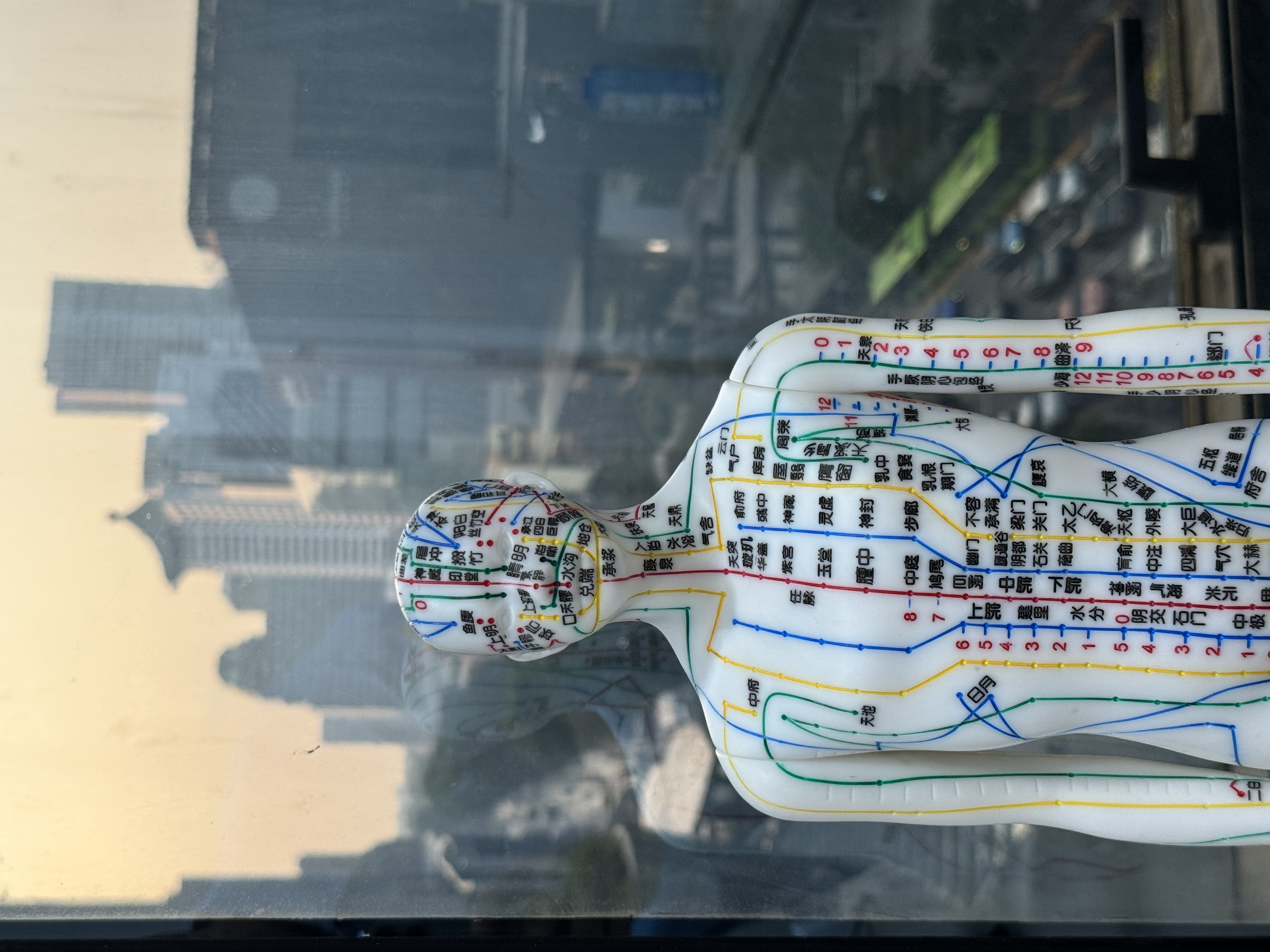
Your consultation considers your symptoms, health history, tongue and pulse findings. In TCM, treatment is selected through pattern differentiation (understanding how your symptoms fit together), rather than giving everyone the same therapy.
Your care may aim to move Qi and Blood, warm the channels, nourish Blood or calm the Shen. These are traditional treatment principles; the choice depends on your assessment.
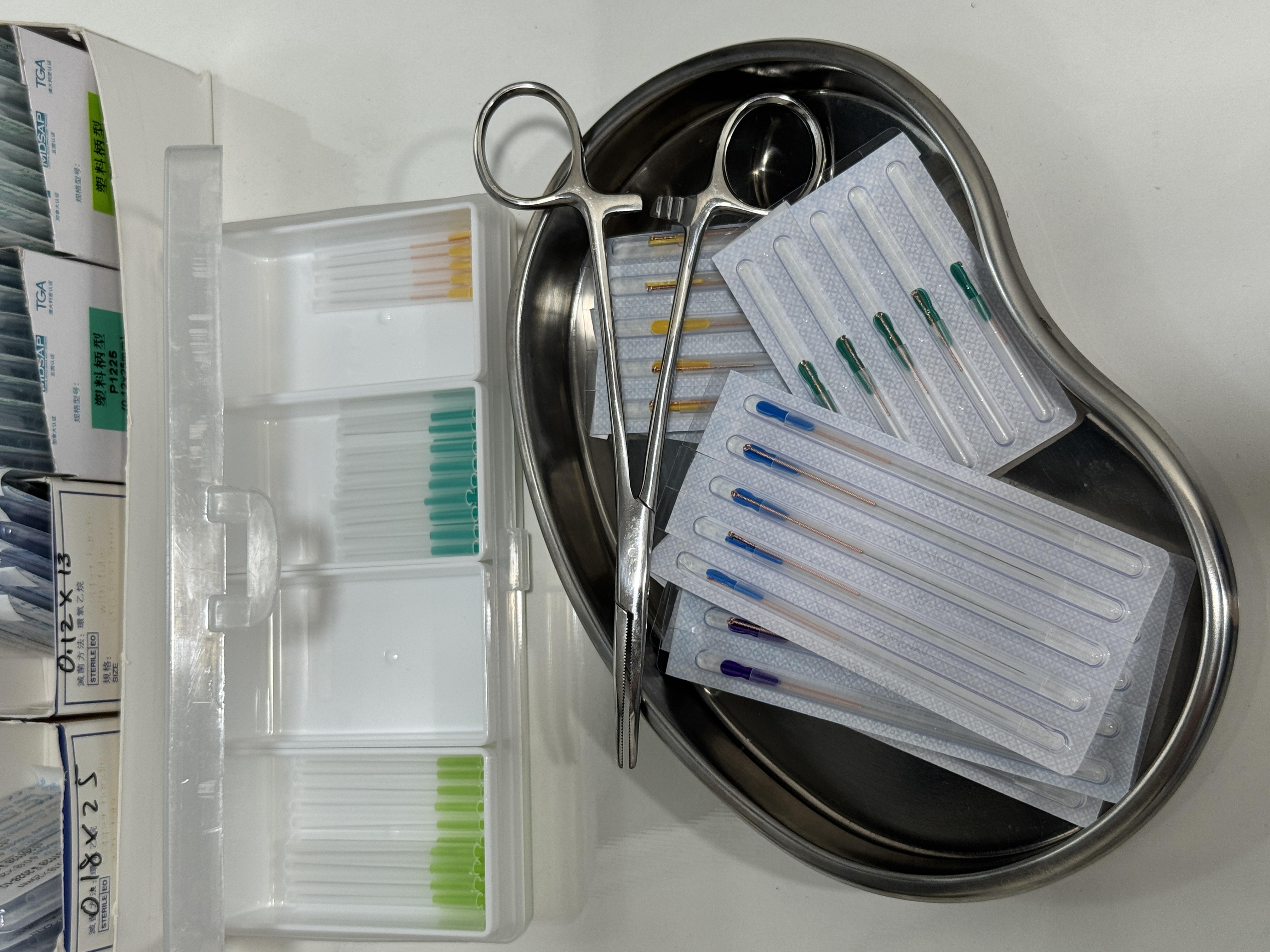
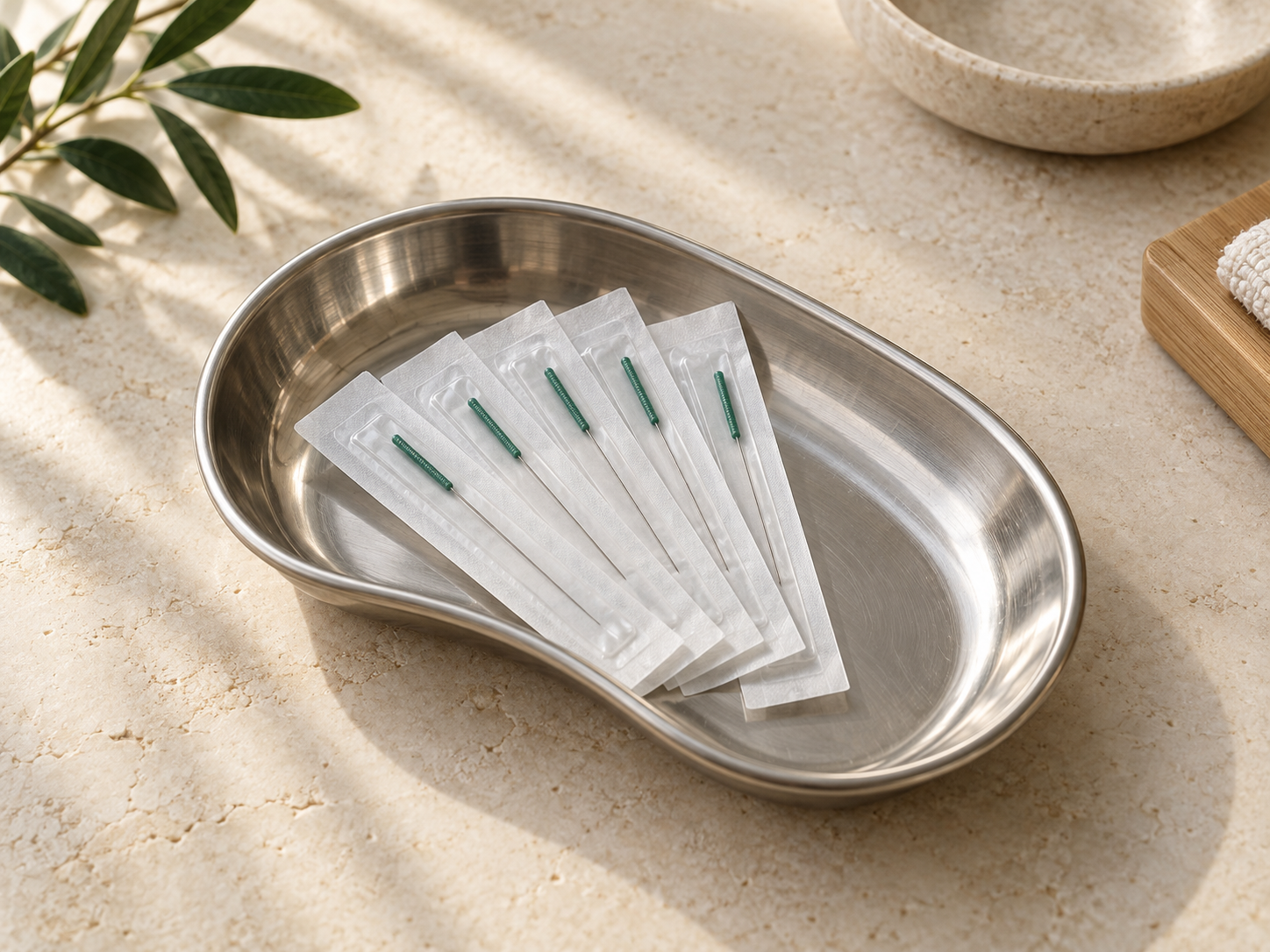
Fine, sterile, single-use needles stimulate selected points. In TCM, point selection aims to regulate Qi and Blood and harmonise the assessed pattern. Your physician explains the selected approach, possible sensations, precautions and aftercare before treatment.
Acupuncture
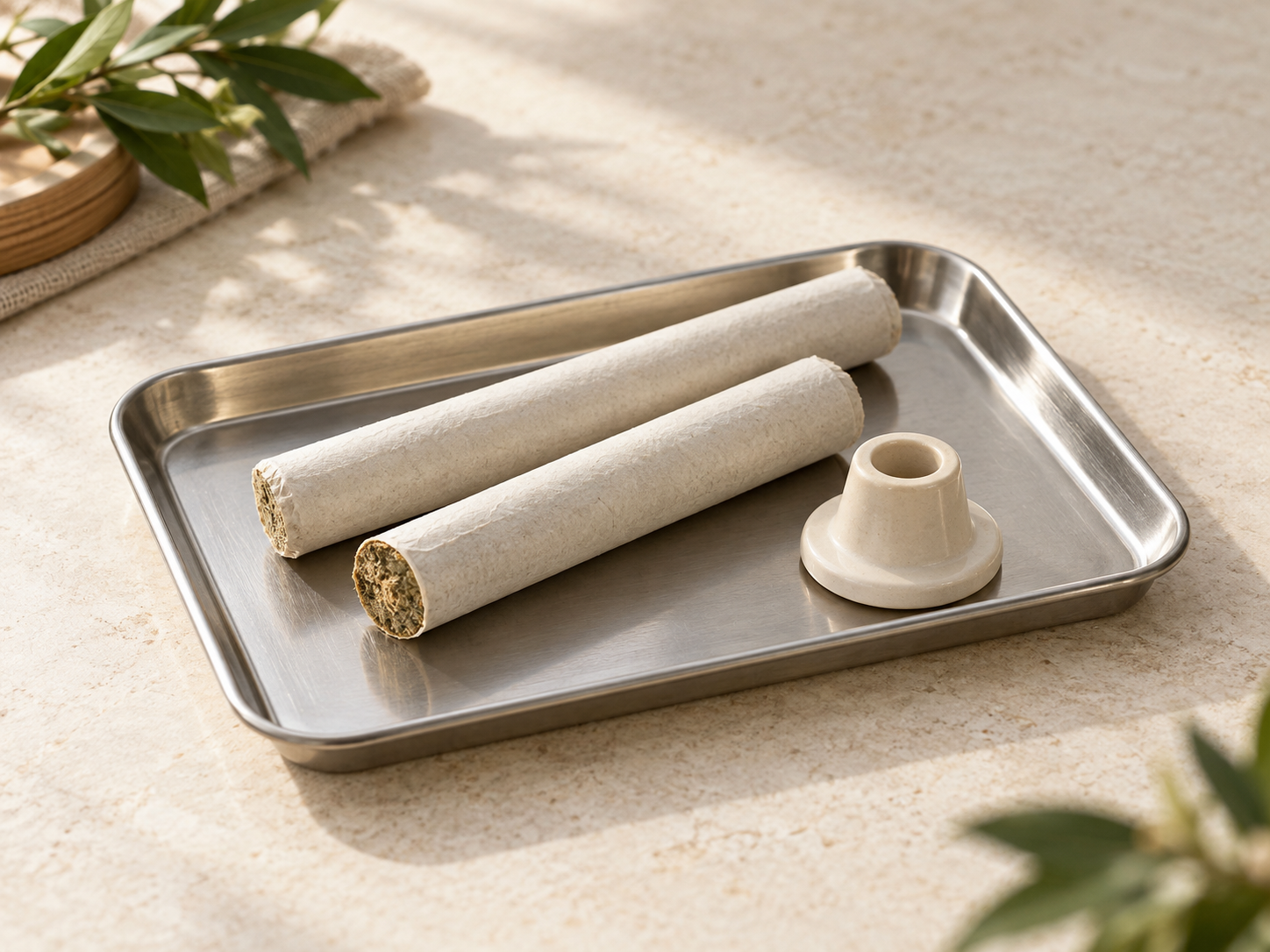
Controlled warmth from moxa is applied at selected areas. Traditionally used to warm the channels, dispel Cold and support Yang (a TCM warming function), it may be considered for appropriate Cold patterns. It is not suitable for every pattern; pregnancy, smoke sensitivity and reduced sensation require particular care.
Moxibustion
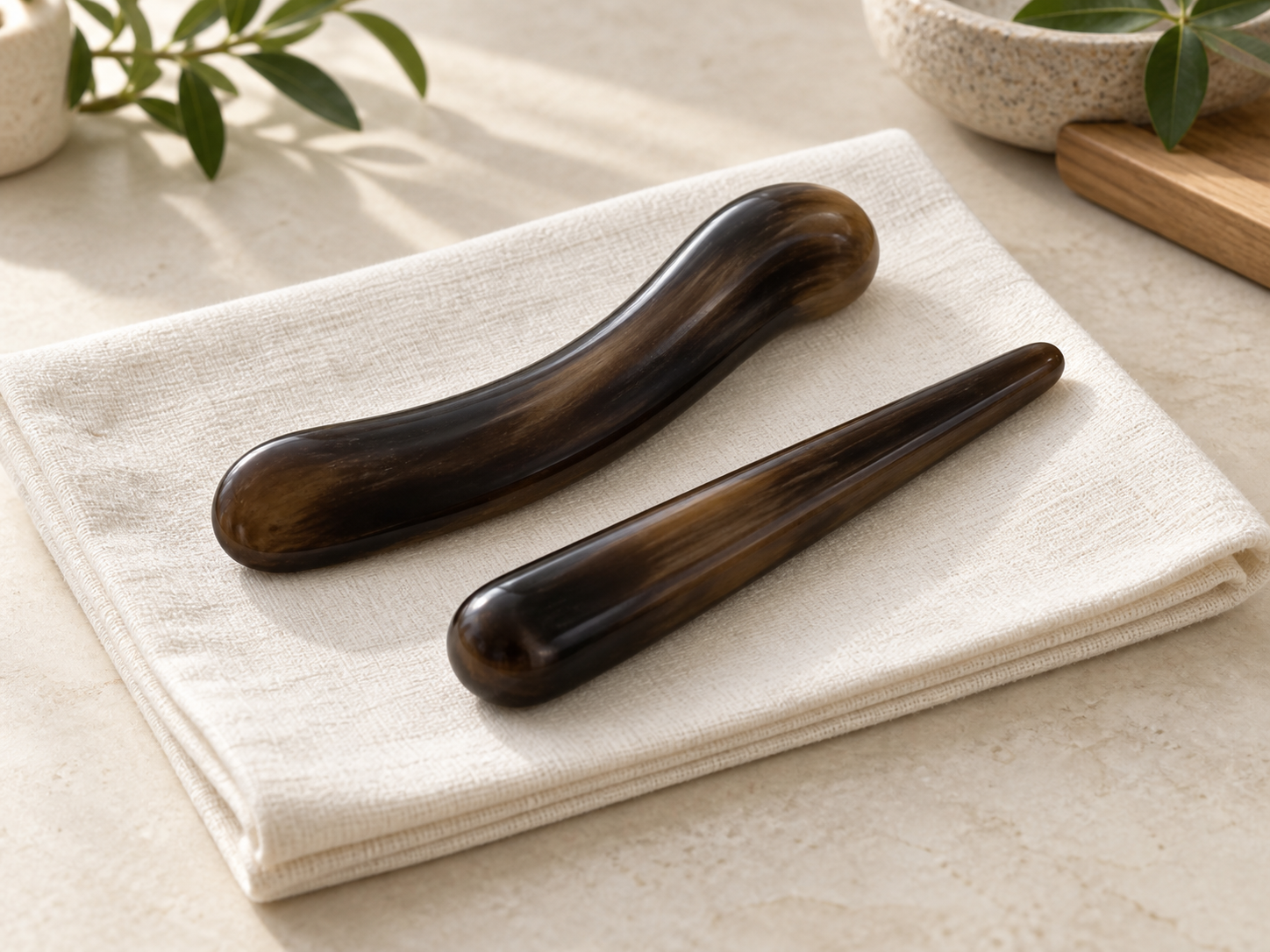
A manual technique using controlled pressure, sometimes with a smooth tool, along selected areas. The traditional aim is to relax the sinews (muscles and tendons) and promote the movement of Qi and Blood. Your physician assesses suitability and explains the method, pressure and precautions before you decide.
Bojin
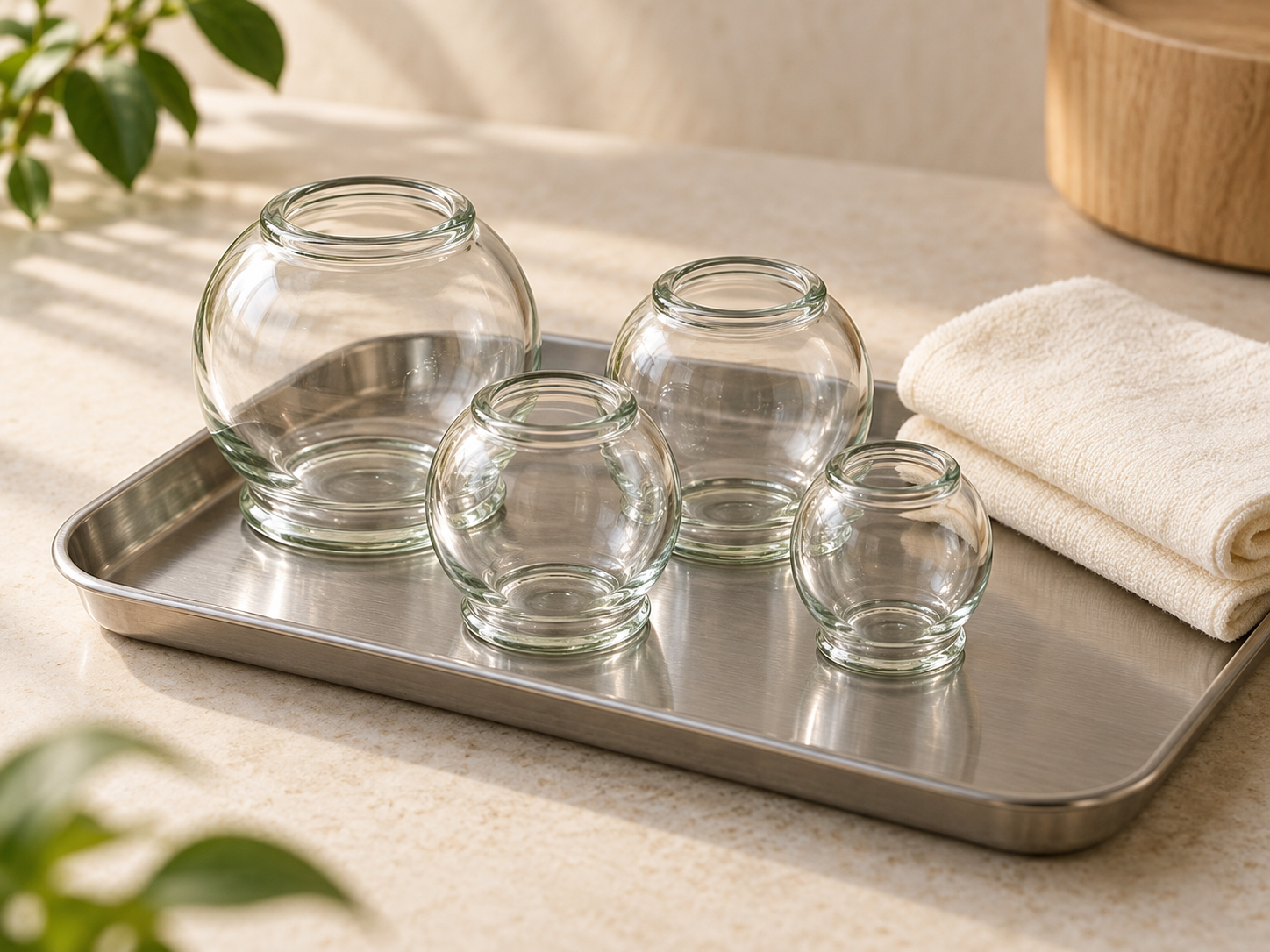
Cups create suction on the skin. In TCM, the aim is to move Qi and Blood and ease stagnation. Suitability, suction strength and treatment areas are discussed after assessment. Temporary circular marks may occur and will be explained as part of aftercare.
Cupping
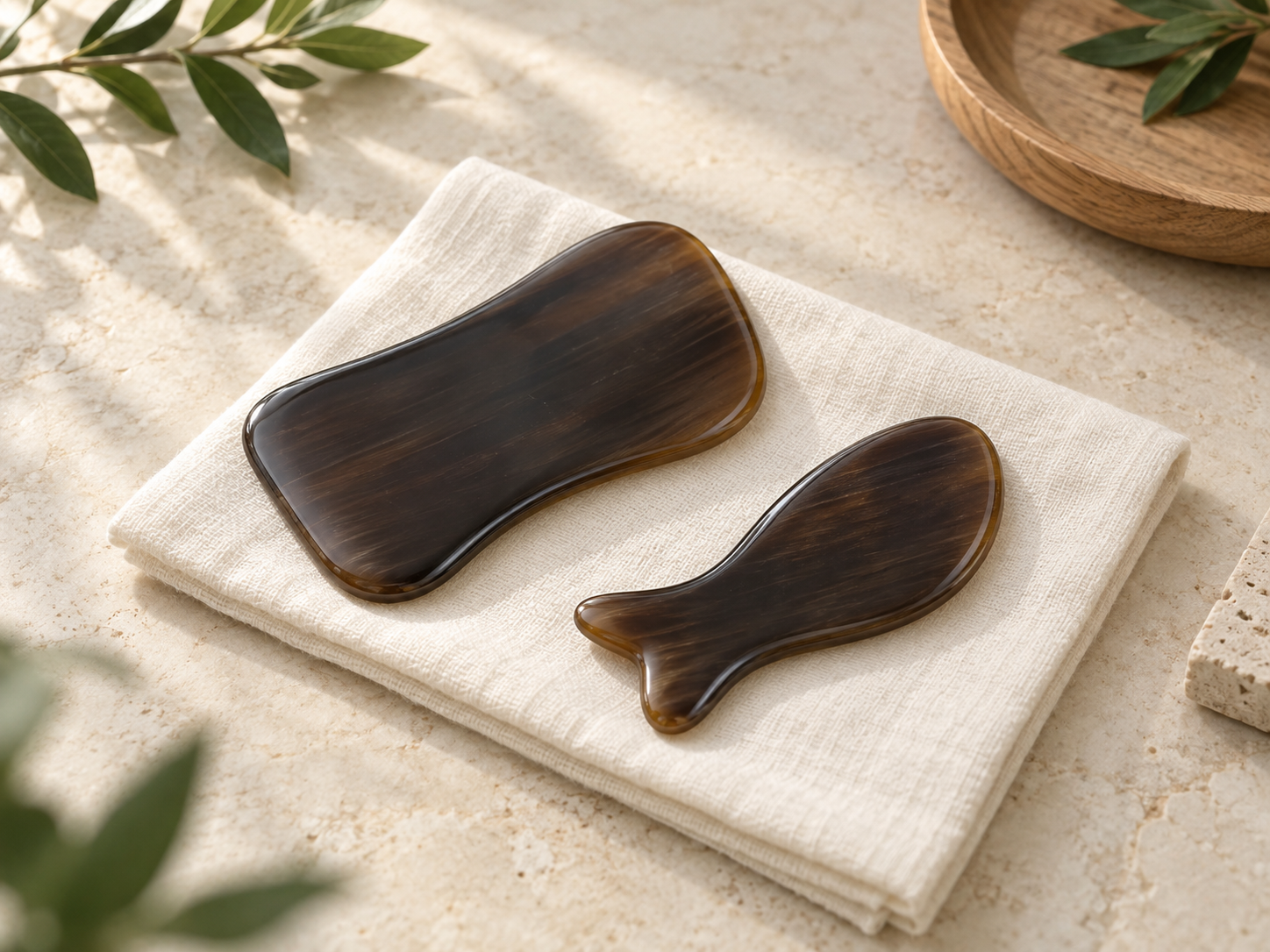
A smooth-edged tool is stroked over lubricated skin. Traditionally used to release the exterior and move Qi and Blood, Gua Sha may be considered for muscle tension or stiffness after assessment. Redness or small bruiselike marks can occur. It should not be applied over broken or infected skin. Your physician explains the technique and aftercare before treatment.
Gua Sha (scraping)
TCM terms, explained simply
Qi and Blood stagnation (a traditional pattern associated with pain, tightness or restricted flow). “Moving Qi and Blood” describes a TCM treatment aim; it does not mean treating a blocked blood vessel.
Heat or “heatiness” (a TCM pattern that may include sensations of heat, thirst or irritability). It is not the same as a measured fever, and persistent symptoms need assessment.
Dampness (a traditional pattern that may involve heaviness, fullness or digestive symptoms). It is not a diagnosis of fluid retention or an instruction to “detox”.
Spleen Qi deficiency (a TCM functional pattern involving digestion and energy). The TCM Spleen is not identical to the anatomical spleen.
Nourishing Blood (a TCM principle used for an assessed Blood-deficiency pattern). It is not a claim to raise haemoglobin or treat anaemia.
Calming the Shen and harmonising Yin–Yang (traditional principles relating to restful sleep, a settled mind and balance between functional patterns). Your physician explains which principles are relevant to your assessed pattern.
Which treatment may be suitable for me?
Your consultation considers menstrual concerns, sleep, stress, discomfort and other symptoms together with your history and preferences. Physician Koh explains the TCM assessment and discusses suitable options. New or persistent symptoms may also need investigation to clarify their cause.
Olive3 also offers weight-management acupuncture, womb moxibustion and Bojin, subject to assessment. These options are discussed after reviewing your concerns, health history and suitability. “Womb moxibustion” is the name used for a TCM warming approach; your physician explains where and how warmth would be applied, together with relevant precautions.
What to tell your physician
Please disclose pregnancy or the possibility of pregnancy, medicines and supplements, blood-thinning treatment, bleeding problems, diabetes, reduced skin sensation, allergies and skin conditions. Each treatment has its own precautions. Benefits and responses vary.
Acupuncture can cause temporary soreness, bleeding or bruising; serious injury or infection is uncommon but possible. Moxibustion carries burn and smoke risks. Cupping and Gua Sha can leave marks and may irritate or injure skin. Your physician will explain relevant risks and obtain consent.
Continue prescribed medical care and keep your healthcare team informed. Seek urgent medical help for severe or sudden symptoms such as chest pain, difficulty breathing or new weakness.
Sources and further reading
MOH / TCMPB practice advisories and ethical guidance — professional conduct, informed consent and treatment safety.
WHO international standard terminologies on traditional Chinese medicine — terminology, not endorsement of every treatment claim.
NIH NCCIH: acupuncture evidence and safety · Cupping evidence and safety.
Plan your care
View consultation and treatment fees →
Explore our areas of care →
Book a consultation →